Every year, the AcademyHealth Annual Research Meeting brings together health services researchers, data leaders, policymakers, and health care innovators from all over the U.S. It is one of our field’s biggest opportunities to share ideas and explore the data and strategies driving better health care outcomes across the country.
CIVHC made another big impact at this year’s conference, from leading a forum discussion and presenting four posters to connecting with partners putting CO APCD data into action, it was another year we were able to showcase CIVHC’s role as a national leader in health data innovation and demonstrate the power of the CO APCD as an engine for change.
Here is a look at another exciting and invigorating year at ARM!
Leading the Discussion
CIVHC Data Research Liaison Martha Meyer, PhD, joined National Organization of Health Data Organizations (NAHDO) Director of Projects Charles Hawley to lead a conversation about the creative ways all payer claims data can be used to create new insights, as well as the challenges that come with claims data and trying to manage that data across multiple states.
Showcasing Insights and Innovation
We presented four posters at this year’s ARM conference, from demonstrating our innovation in claims data management to displaying new ways to use claims data to drive important insights. Here’s a snapshot of each poster presented:

Evaluating Imputation to Reduce Race and Ethnicity Missingness in the Colorado All Payer Claims Database
Reliable race and ethnicity data are essential for understanding disparities, measuring equity, and supporting population health improvement. This poster evaluated whether imputation methods could reduce missing race and ethnicity data in the CO APCD, where payer-submitted records regularly show substantial missingness.
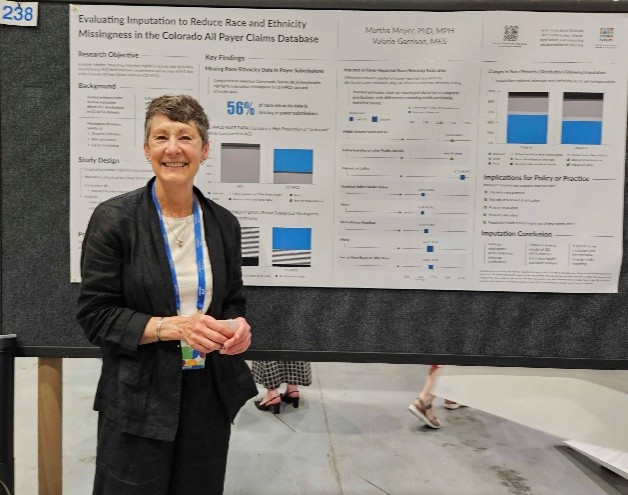
The analysis found that imputation reduced unknown race and ethnicity by 11 percentage points and helped create more complete data for disparity measurement, risk adjustment, program evaluation, resource allocation, and population health monitoring. The work also reinforced an important principle: better data methods can strengthen equity-focused analysis, but transparency about data quality and limitations remains key.
Enrollment Growth and Differences in Utilization and Spending Between Medicare Advantage and Traditional Medicare in Colorado
Medicare Advantage enrollment has grown rapidly in Colorado, surpassing Traditional Medicare enrollment in 2024. This poster examines enrollment trends, population differences, health care utilization, and spending between Medicare Advantage and Traditional Medicare beneficiaries from 2018 to 2024.

Findings showed that Medicare Advantage and Traditional Medicare serve different populations and have different care patterns. While Traditional Medicare continued to have higher inpatient and readmission rates, Medicare Advantage spending remained higher across most years despite lower inpatient use. As Medicare Advantage enrollment continues to grow, these differences offer important context for evaluating cost trends, payment policy, and program sustainability.
Automating Health Care Data Validations
Behind every public report, analysis, and data-driven insight is an enormous amount of careful data processing. Claims data are powerful, but they are also complex. Before data can be used for reporting or research, they must be reviewed, validated, and checked for quality.
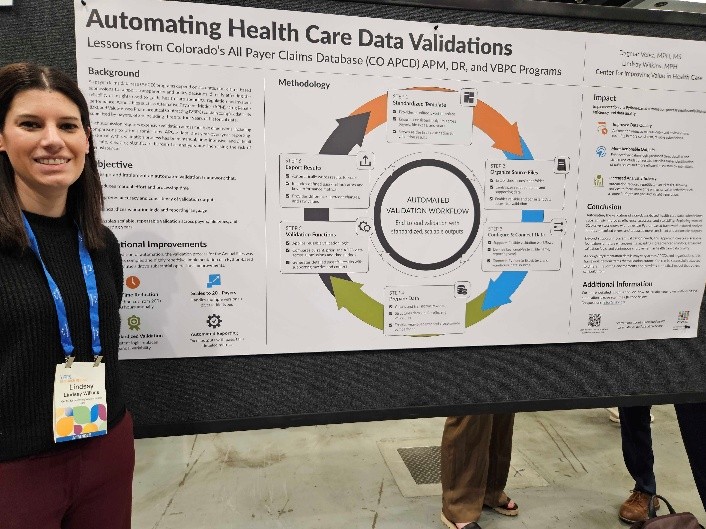
This poster highlighted CIVHC’s work to automate health care data validations, improving efficiency and consistency in data quality review. Automation can help reduce manual burden, identify potential issues earlier, and support more reliable data pipelines.
Chronic Conditions in Colorado
Chronic conditions affect many Coloradans and drive a significant portion of health care utilization and spending. This poster presented our new Chronic Conditions Analysis, which examines the cost burden and prevalence of 30 chronic conditions across Colorado over a seven-year span from 2017 to 2023.
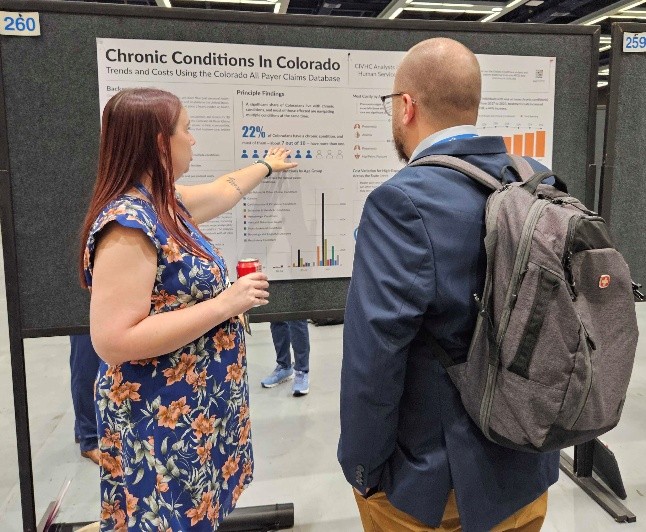
The analysis sheds light on where chronic conditions place pressure on the health care system and where opportunities exist for the health care system to support better outcomes, affordability, and long-term health.
CO APCD Data in Action
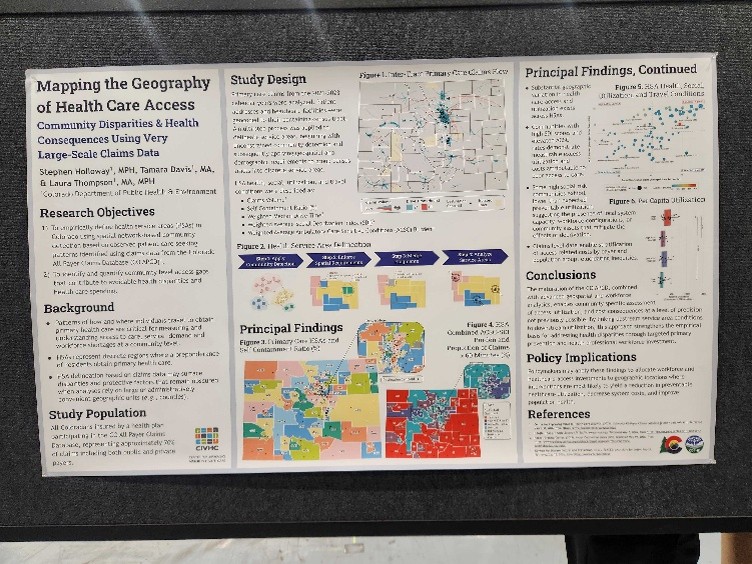
The ARM conference didn’t just give us the opportunity to showcase our own work, but to see how CO APCD data is being put to work across the country. We visited poster presentations featuring CO APCD data from the University of Maryland School of Pharmacy, presenting the impact of the COVID-19 pandemic on commercially and Medicaid-insured youths with ADHD, and the Colorado Department of Public Health and Environment presenting a project mapping health care access and regional disparities across the state. We also sat in on presentations from partners at the CU Anschutz School of Medicine presenting research on the prevalence and outcomes of Autism Spectrum Disorder diagnoses across Colorado, and research from Boston University looking at the connection between Medicaid coverage and postpartum mental health treatment
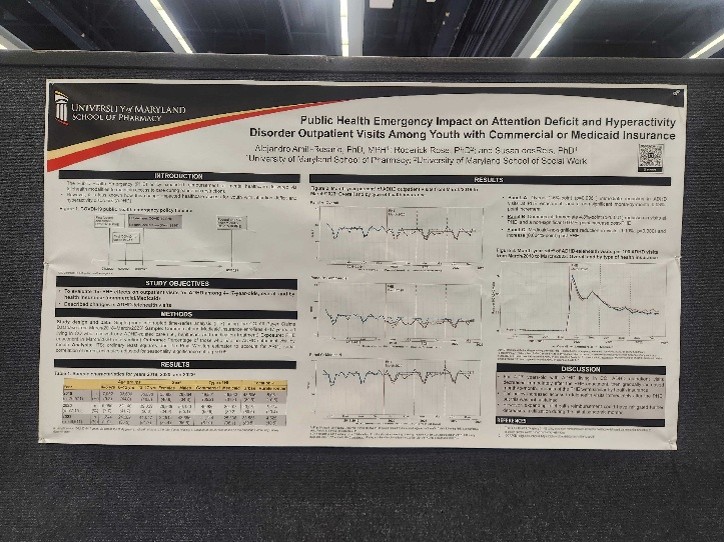
We were proud to be a part of this year’s AcademyHealth Annual Research Meeting to highlight the power of CO APCD data to support health care research, transparency, and improvement. Explore the posters linked above to learn more about the research we presented this year and how CO APCD data continue to support health care improvement across Colorado and the U.S.