A Closer Look at Coloradan’s Heart Health
With 300 annual days of sunshine and ample opportunities for outdoor recreation, Colorado is consistently ranked as one of the fittest states in the country. This active lifestyle translates to better heart health – with the CDC having reported Coloradans as having the lowest obesity rate in the country (24.2%)1, the third lowest heart disease rate in the country2, and the state with the lowest self-reported prevalence of hypertension3. Despite these healthy rankings, CIVHC’s Chronic Conditions Analysis has found that hypertension, or high blood pressure, is the most prevalent condition affecting Coloradans.
Chronic Conditions are long-term illnesses that require ongoing care and are among the leading causes of death and disability in the United States. In Colorado, 22% of residents are living with at least one chronic condition and 68% of those individuals are managing more than one at the same time.
To better understand these trends, CIVHC’s research team conducted a comprehensive Chronic Conditions Analysis, examining 30 chronic diseases from 2017 through 2023 to uncover patterns in prevalence, cost, and overall spending. Below, we take a closer look at the data and insights from the CO APCD on four chronic conditions related to heart health, including hypertension, acute myocardial infarction, ischemic heart disease, and non-ischemic heart disease.
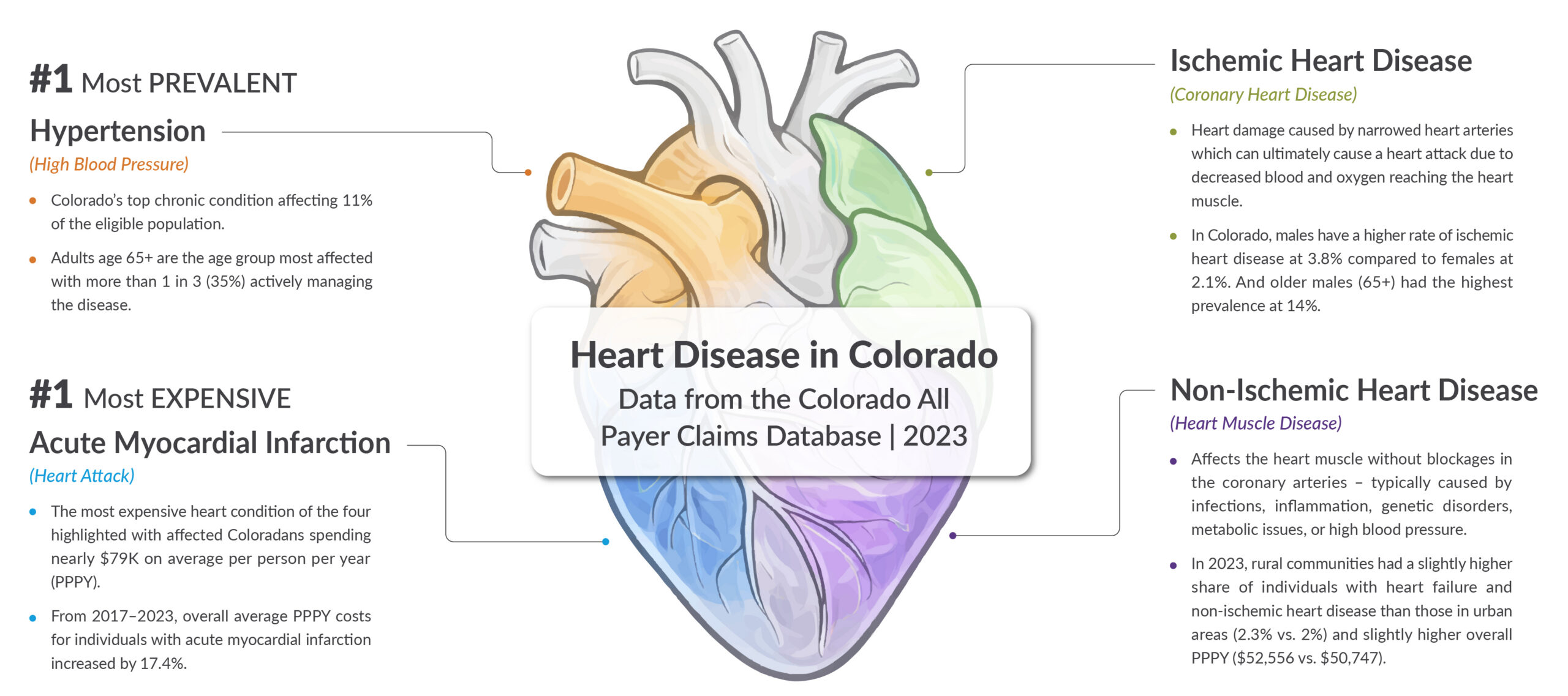
Hypertension: Colorado’s Most Common Chronic Condition

Click the image above to see more findings and trends.
Hypertension, or high blood pressure, is the most prevalent chronic condition among adults in Colorado, affecting 11.2% of the eligible population. That number rises to 35.2% among Coloradans aged 65 and older, although it's slightly improved from 39.8% in 2017.
The financial burden is just as alarming. From 2017 to 2023, average annual spending per person with hypertension increased by 30%. There is also a rural health gap: 14.7% of eligible rural residents live with hypertension, compared to 10.7% in urban areas.
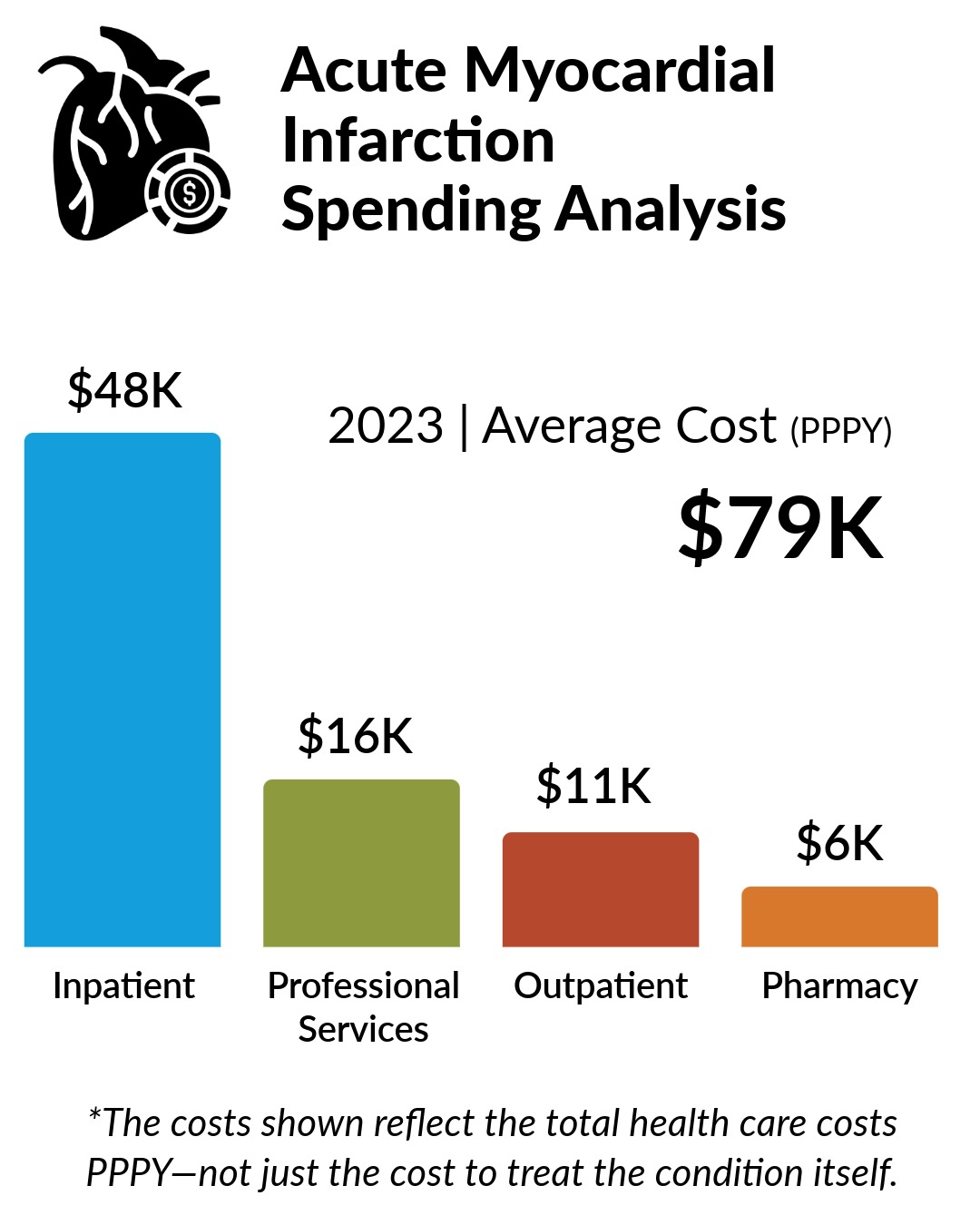
Acute Myocardial Infarction, more commonly known as a heart attack, occurs when an area of the heart muscle is damaged or dies after blood supply is blocked. In 2023, the average overall spending per person per year (PPPY) was $78,718-the highest of the four highlighted heart-related conditions. From 2017–2023, overall average PPPY costs for individuals with acute myocardial infarction increased by 17.4%.

Non-Ischemic Heart Disease affects the heart muscle without blockages in the coronary arteries. These may result from infections, inflammation, genetic disorders, metabolic issues, or high blood pressure. In 2023, rural communities had a slightly higher share of individuals with Heart failure and non-ischemic heart disease than those in urban areas (2.3% vs. 2%) and slightly higher overall all PPPY. ($52,556 vs. $50,747). The counties with the highest percentage of individuals living with the disease as of 2023 are: Sedgwick, Mineral, Baca, Phillips Lincoln, and Huerfano.
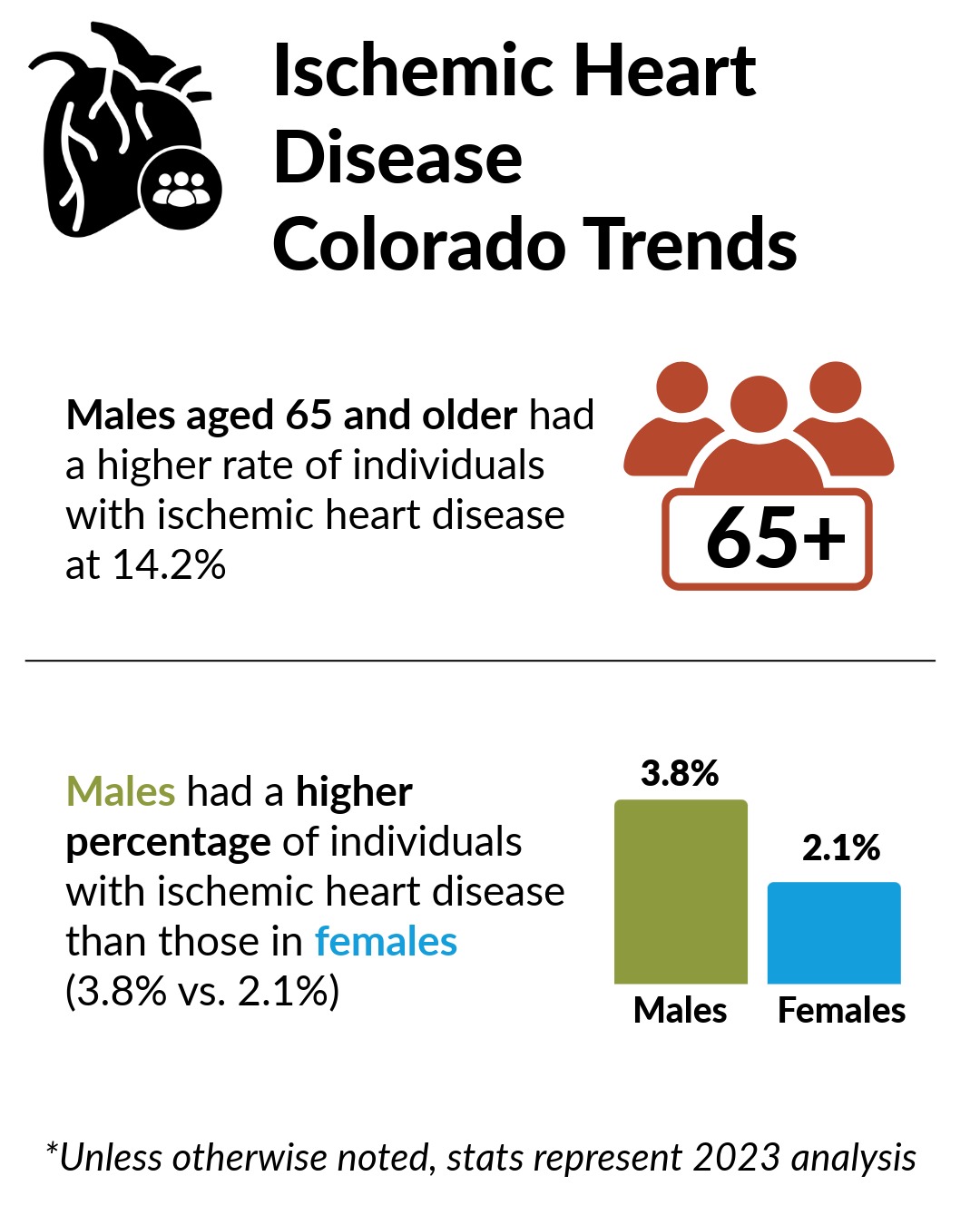
Ischemic Heart Disease is heart damage caused by narrowed heart arteries. This is also called coronary artery disease and coronary heart disease. When arteries narrow, less blood and oxygen reach the heart muscle. This can lead to heart attack. From 2017–2023, the share CO APCD members with ischemic heart disease increased slightly from 2.8% to 2.9%. Males had a higher rate of individuals with ischemic heart disease at 3.8% compared to females at 2.1%. Older males 65 years of age and up had the highest at 14.2%, down from 15.8% in 2017. This is similar among rural and urban communities.
Conclusion: A Call to Action for Heart Health
Heart-related chronic conditions continue to impact thousands of Coloradans, especially older adults and rural populations. While Colorado leads the nation in low hypertension rates, the prevalence and cost of heart-related conditions remain significant and deserve continued attention.
CIVHC’s Chronic Conditions Analysis offers valuable insights into the trends, costs, and disparities tied to these conditions. Whether you're a provider, policymaker, or advocate, explore the full Chronic Conditions Analysis to better understand the impact of heart-related conditions and how we can work together to improve outcomes across Colorado.
Visit our Chronic Conditions Analysis page to access the full report and help drive change through data.