- Nonprofits
Case Study
Colorado Health Foundation

Key Highlights
- CIVHC and the Colorado Health Foundation evaluated whether investments in primary care infrastructure improved access and utilization in communities across Colorado.
- The analysis used CO APCD claims data from 10 funded clinics, including Federally Qualified Health Centers and non-FQHCs.
- Patients of funded clinics had 0.459 more primary care visits per member per year than other individuals living in the same service areas.
- Findings indicate that capital investments in primary care facilities can increase access to primary care and support more consistent utilization.
Evaluating the Impact of Investment in Capital Infrastructure on Access to Primary Care
Profile
CHF’s Capital Infrastructure in Support of Team-based Comprehensive Primary Care funding opportunity focuses on expanding geographic access to primary care, behavioral health and dental services while promoting team-based care or improved health information technology systems. From its 2008 inception through 2021, the Foundation has provided 87 grants to 57 unique health care organizations serving a variety of regions in the state.
Summary
CHF and CIVHC partnered to understand the impact of primary care capital investment on communities in which those investments were made, and whether community members sought more primary care services due to the proximity of these clinics. Specifically, this analysis sought to understand whether capital infrastructure investments impact primary care utilization and access to behavioral health services. The analysis was conducted using Colorado All Payer Claims Database (CO APCD) claims from a subset of the 57 unique health care organizations to which CHF made capital investment grants, focusing on 10 clinics that were comprised of Federally Qualified Health Centers (FQHCs) and non-FQHCs.
Findings
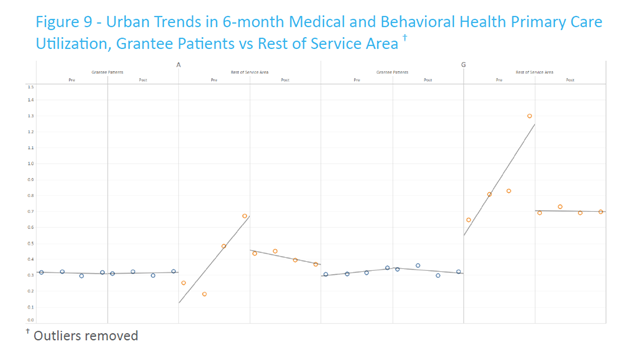
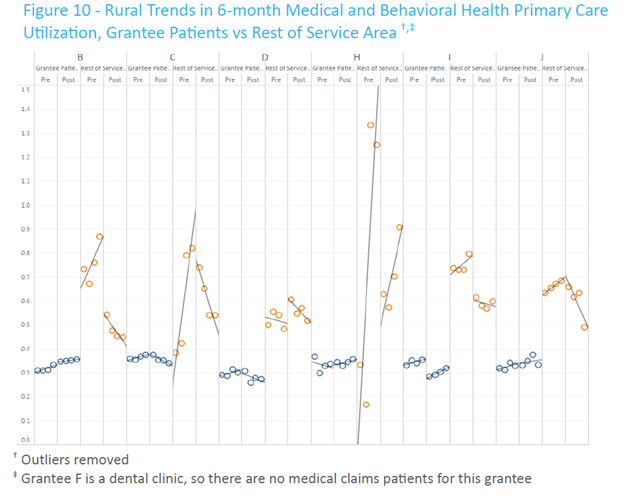
Results from the analysis demonstrated that holding all else constant, patients of CHF primary care infrastructure grantees have higher per-member-per-year (PMPY) primary care utilization rates than individuals living within the service area who are not patients of the grantee facility (0.459 ± 0.021 visits more PMPY than non-patients). The trend comparison also appears to demonstrate that the 6-month visit rate is more stable for patients of grantees when compared to non-patient members in the service area.
Benefit to Colorado
Through strategic funding, CHF aims to improve health equity by increasing access to primary care for communities that have historically experienced inequitable health outcomes. CHF’s Capital Infrastructure in Support of Team-based Comprehensive Primary Care funding opportunity is intended to expand geographic access to care and develop facilities that promote better team-based care or improved health information technology systems. This evaluation demonstrates that the funding is effectively increasing access to primary care services for grantees and supports CHF’s goal to continue to enhance the capacity of clinics to serve more Coloradans with high-quality, comprehensive, and integrated primary care centered on patients’ preferences, needs, and values.

Case Study
Colorado Dental Association
- Health Care Organizations

Case Study
Colorado Primary Care Office
- Policymakers & State Agencies
